

Child-Resistant Closures vs. Tamper Evident: Key Differences
By DropperBottles.com Editorial Team · Updated 2026-08-31
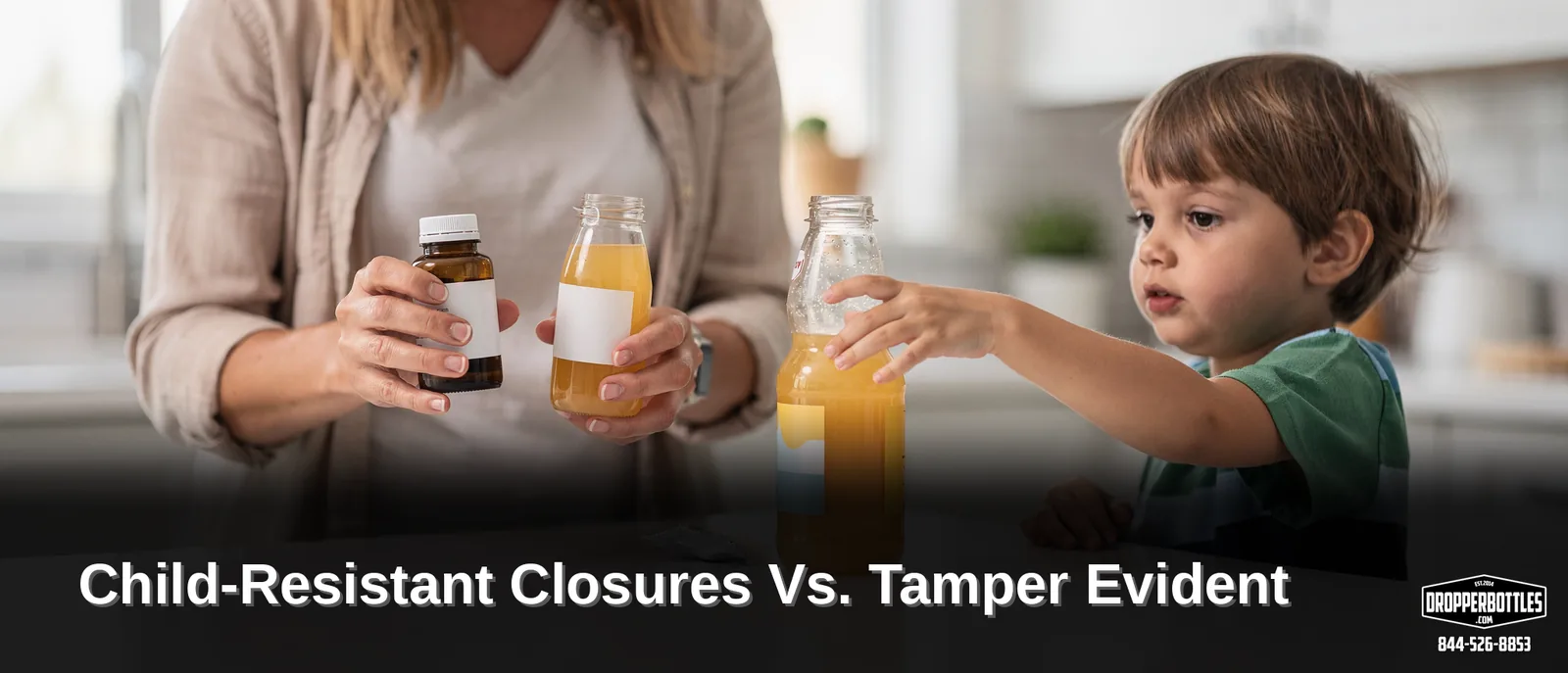
Child-resistant closures prevent young children from accessing hazardous contents through mechanisms requiring coordinated adult manipulation. Tamper-evident closures reveal unauthorized opening through visible seals, bands, or breakable elements. CBD, nutraceutical, and pharmaceutical manufacturers often require both features on the same container, depending on formulation risk and jurisdiction.
Key Takeaways
-
Tamper-evident closures show visible signs of product tampering, protecting brand integrity and consumer safety.
-
Child-resistant closures use a mechanical design, such as a push-and-turn motion, that is difficult for young children to operate.
-
Pharmaceutical and nutraceutical products require different closure types based on regulatory compliance and product risk levels.
-
DropperBottles.com's patented DripTrap Dropper Assembly eliminates leaks while maintaining compatibility with both safety closure types.
What Sets Child-Resistant Closures Apart From Tamper-Evident Seals?
Two distinct package safety features protect consumers in different ways, and confusing them creates real compliance risk. Tamper-evident closures and child-resistant closures serve separate purposes under federal packaging standards. Manufacturers who treat them as interchangeable risk shipping products that fail inspection or, worse, fail to protect the end user.
Child-resistant closures exist to keep children out of containers holding potentially harmful substances. Prescription medications, household chemicals, and certain nutraceutical formulas fall into this category. These caps require a specific mechanical action — a push-and-turn motion, for example — that a young child cannot easily replicate. Exact testing standards and age thresholds are set by regulatory bodies such as the U.S. Consumer Product Safety Commission, so brands should confirm current requirements with regulatory counsel rather than relying on general packaging descriptions.
Tamper-evident seals answer a different question: has the container been opened before it reached the customer? The FDA defines a tamper-evident feature as an indicator or barrier that shows visible evidence of entry, whether that evidence is a broken band, a missing seal, or a punctured membrane.
Can a bottle need both features at once?
Yes. Many pharmaceutical and CBD products require both a child-resistant cap and a tamper-evident band on the same container. Compliance officers should verify both specifications separately rather than assuming one satisfies the other.
|
Feature |
Primary Function |
|---|---|
|
Child-resistant closure |
Prevents access by young children |
|
Tamper-evident seal |
Signals prior container entry |
As a wholesale supplier of glass and plastic packaging, DropperBottles.com gives compliance teams a single reference point for evaluating these options at volume.
How Does DropperBottles.com Support Compliant Packaging Programs?
DropperBottles.com engineers hardware and support systems built for brands managing child-resistant closures, tamper-evident closures, and broader CBD packaging requirements. Compliance officers need packaging partners who solve leak risk, fulfillment delays, and specification questions simultaneously. Reliability starts at the component level.
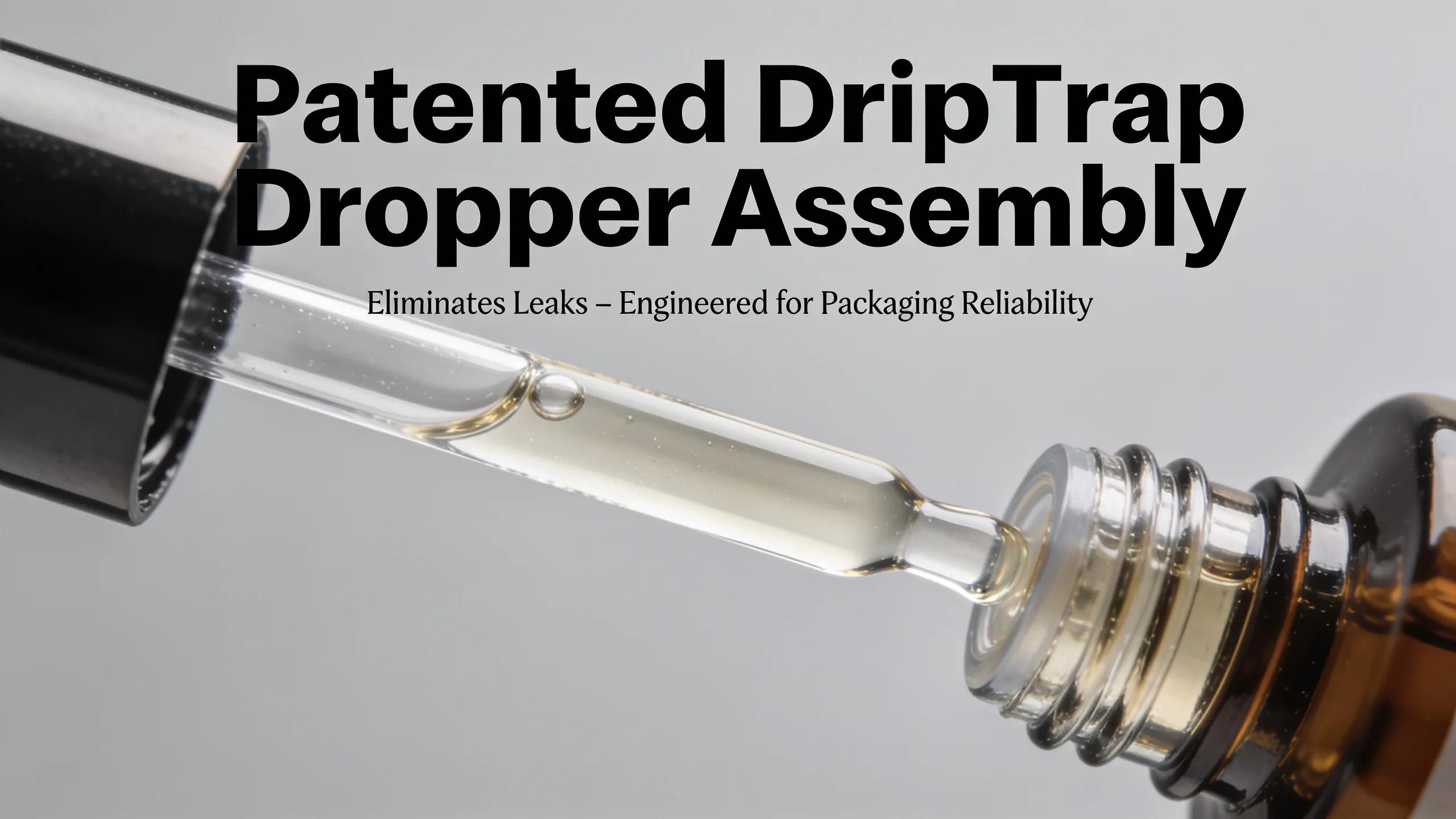
The patented DripTrap Dropper Assembly eliminates leaks entirely. That engineering detail matters for tincture and nutraceutical brands pairing droppers with safety closures. A failed seal undermines even the best child-resistant design.
Where does DropperBottles.com ship orders from?
Every order ships directly from a dedicated warehouse in Plano, Texas. This single-origin model gives operations teams predictable transit times instead of relying on overseas freight. Worldwide shipping partnerships extend that reliability, keeping rates competitive and delivery windows consistent for large closure and container orders.
Who answers compliance and specification questions?
A dedicated support team fields questions around the clock. Packaging engineers can confirm closure specifications, torque requirements, or CBD-specific labeling considerations before committing to a bulk purchase. For actual legal compliance sign-off, brands should still route final decisions through their own regulatory or legal counsel — a packaging supplier can confirm what hardware is available, but not certify a specific market's legal requirements.
Buyers also get room to evaluate products before finalizing a program:
-
Fulfillment: Direct shipment from the Plano warehouse, backed by global shipping partnerships.
-
Support: Around-the-clock assistance for specification and compliance questions.
-
Returns: Accepted within 30 days of purchase, excluding single-item or sample orders.
Together, these systems give compliance teams a defensible, well-documented sourcing process.
Do Requirements Vary by State or Product Category?
Yes, and this is where brands most often run into trouble. Federal rules under the Poison Prevention Packaging Act set a baseline for which product categories require child-resistant packaging, but individual states — particularly for CBD and hemp-derived products — frequently layer on their own requirements on top of that baseline. A tincture that ships compliantly in one state may need a different closure configuration to meet another state's rules. Brands selling across multiple states should treat closure specification as a per-market checklist rather than a single, universal decision made once at product launch.
The same logic applies to tamper-evident seals. While the FDA's tamper-evident guidance for over-the-counter products is federally consistent, retailers and marketplaces sometimes add their own listing requirements on top of the legal minimum. Confirming both the legal requirement and any platform-specific requirement before a production run avoids a batch of finished product that's compliant but still gets rejected by a specific retail partner.
What Should CBD Brands Verify Before Ordering Closures?
Verification starts with matching closure type to formulation and jurisdiction. Child-resistant closures and tamper-evident closures are two distinct packaging technologies built for different purposes. CBD manufacturers must confirm which one their product, state, or country actually requires before placing an order. Skipping this step risks compliance failures that surface only after product hits retail shelves.
Do CBD products need child-resistant caps or tamper-evident seals?
The answer depends on formulation risk and regional rules, not brand preference. Child-resistant designs limit access by young children to potentially harmful contents. Tamper-evident seals reassure customers that a product hasn't been opened or altered before purchase. Many CBD tinctures require both features layered together, particularly where CBD packaging requirements mandate child-resistant closures at the state level.
What else should procurement teams confirm before ordering?
Beyond closure type, teams should verify supply chain reliability and transaction security. A short checklist helps:
-
Confirm which closure type applies to the specific formulation and market
-
Verify seal integrity meets tamper-evident standards for retail
-
Confirm the supplier processes payments through encrypted channels
-
Consolidate sourcing with a single wholesale supplier of bottles, dropper assemblies, and containers to keep components consistent across production runs
FAQ
What is the difference between child-resistant and tamper-evident closures?
Child-resistant closures prevent young children from accessing hazardous contents through mechanisms requiring coordinated adult manipulation. Tamper-evident closures reveal unauthorized opening through visible seals, bands, or breakable elements that show prior container entry.
Does a product ever need both closure types?
Yes, many pharmaceutical and CBD products require both a child-resistant cap and a tamper-evident band on the same container. Compliance officers verify both specifications separately rather than assuming one satisfies the other.
How does DropperBottles.com support compliant packaging programs?
DropperBottles.com engineers hardware and support systems for brands managing child-resistant and tamper-evident closures, including the patented DripTrap Dropper Assembly that eliminates leaks. Orders ship directly from a dedicated warehouse in Plano, Texas.
Conclusion
In closing, child resistant and tamper evident closures serve distinct but complementary protective functions within pharmaceutical and consumer packaging. While child resistant closures prioritize safety through design complexity, tamper evident closures provide visible assurance of product integrity. Selecting the appropriate closure—or combining both features—depends on regulatory requirements, product type, and end-user needs, and brands should confirm final specifications with their own regulatory counsel. DropperBottles.com maintains a broad inventory of closure solutions to meet these critical compliance and safety standards across diverse applications.