

Choosing Glass Types for Droppers
By DropperBottles.com Editorial Team · Updated 2026-08-05
Amber glass, specifically USP Type III borosilicate, protects light-sensitive tinctures by blocking UV rays below 450nm. Boston round bottles in amber or cobalt blue remain the industry standard for drop
Neck finish compatibility determines dropper fit, with standard codes like 18/400 or 20/410 indicating opening diameter. Thread style; matching these two numbers ensures the closure seals properly and prevents leakage or spoilage of concentrated oils.
Glass dropper bottle selection depends on clarity, chemical resistance, and neck-finish compatibility. Euro round glass bottles, such as the 30mL 18-DIN style sold by DropperBottles.com, offer high clarity, colorability, and strong resistance to heat, cold. Chemical interaction—making them suitable for oils, tinctures, and concentrated cosmetic formulations requiring tamper-evident or child-resistant dropper assemblies.
Key Takeaways
- Neck finish compatibility requires two key measurements: opening diameter and thread style specifications.
- Dropper bottles preserve sensitive ingredients in skincare, wellness, aromatherapy, and laboratory formulations effectively.
- Glass dropper bottles enable controlled, accurate dispensing for highly concentrated or potent oils.
- Bottle selection influences product perception and shapes how users dispense formulations.
What glass types work best for dropper bottles?
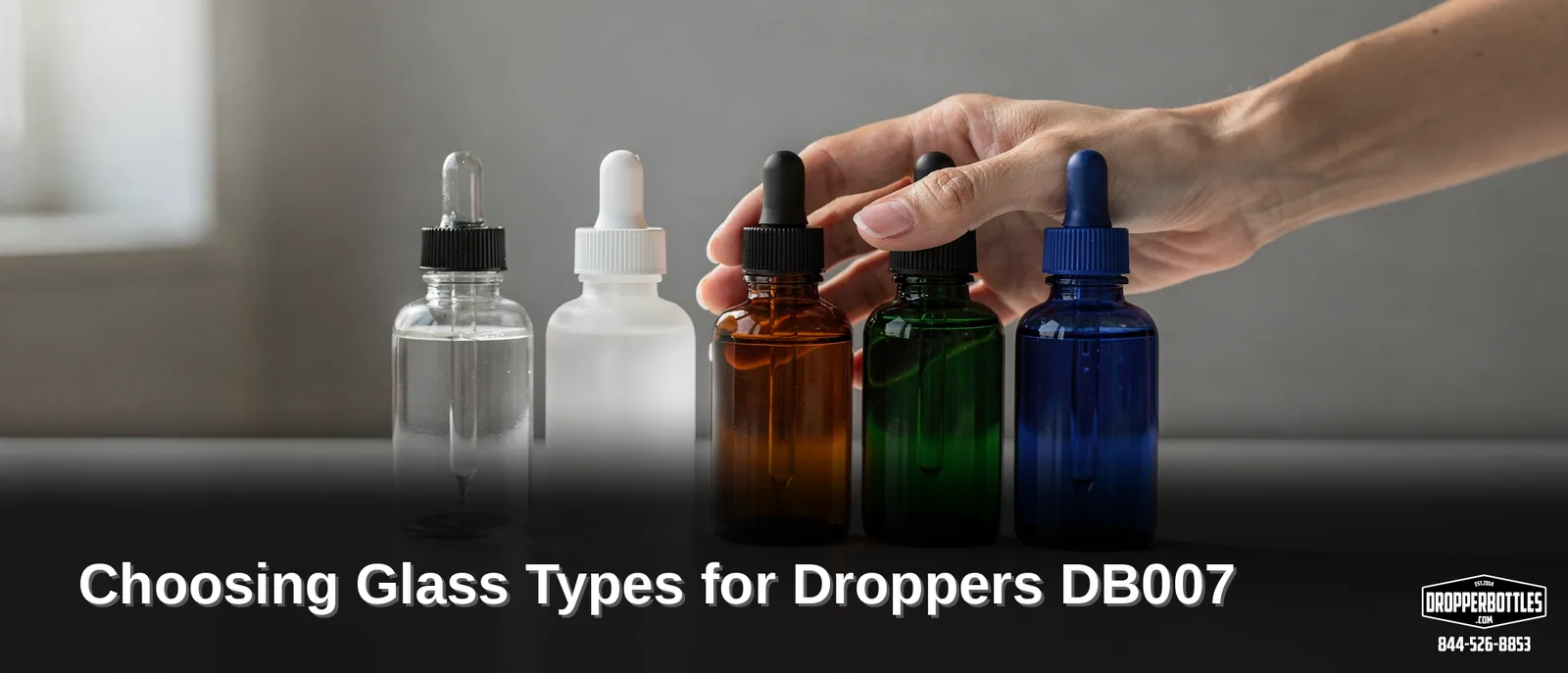
Borosilicate and soda-lime formulations dominate premium dropper packaging for cosmetic and wellness formulators. Selecting among glass types for droppers db007 depends on chemical exposure and thermal handling. Clarity, color, and resistance to heat and cold all factor into which container protects a formulation best.
Glass delivers high optical clarity and can be tinted for light protection, along with strong chemical resistance and tolerance for extreme temperature swings. Those properties make glass containers a reliable choice for storing volatile or concentrated oils that would degrade faster in plastic. Euro-style dropper bottles build on that foundation, engineered specifically to accept tamper-evident, child-resistant, or standard closures fitted with inverted pipettes.
Does amber glass protect formulations better than clear glass?
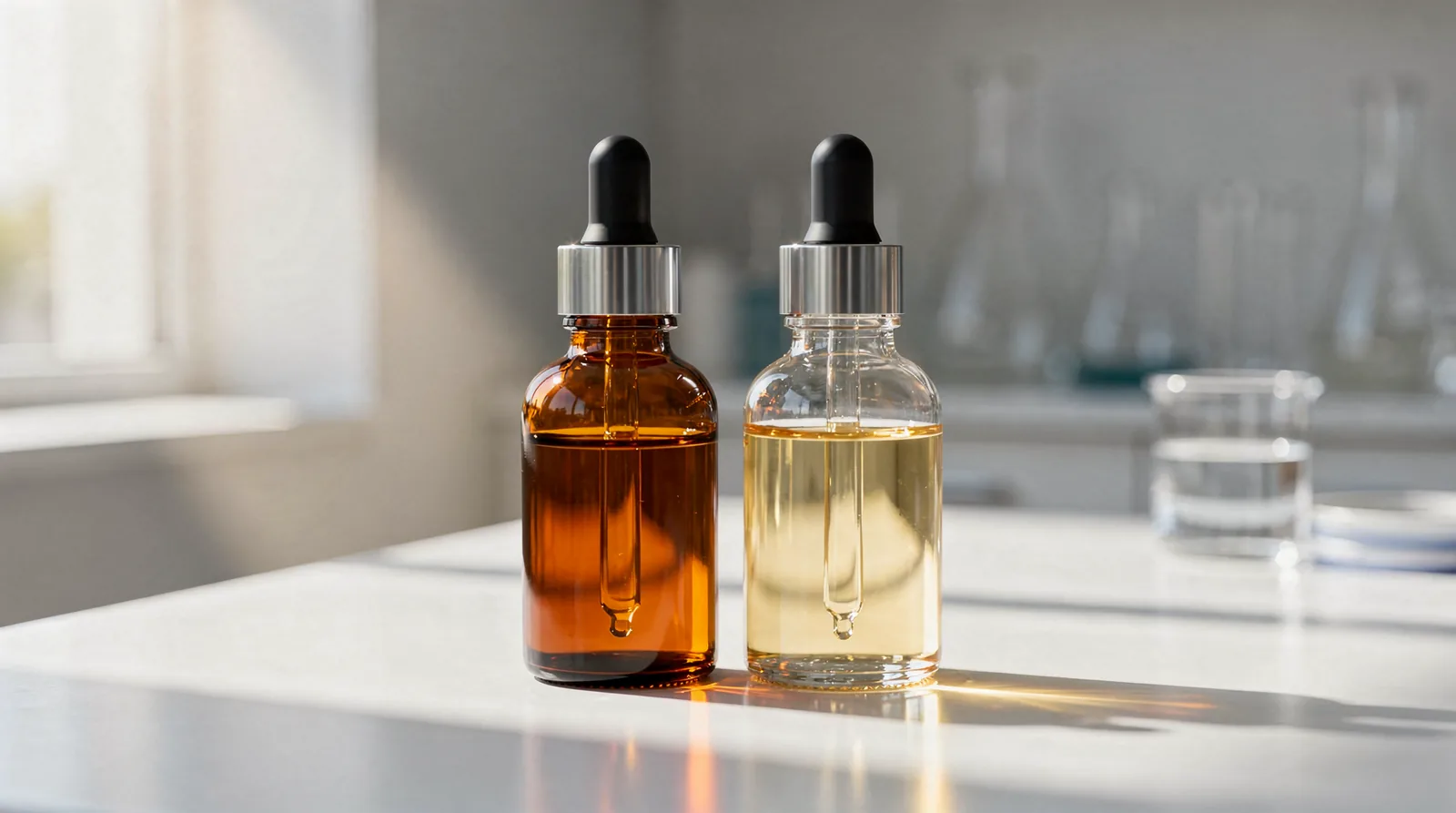
Comparing amber vs clear glass db007 options comes down to light sensitivity and brand presentation. Amber glass blocks more UV exposure, which helps preserve light-sensitive actives in essential oils and serums. Clear glass, by contrast, showcases product color and clarity but offers less protection against degradation over time.
Are borosilicate droppers worth the upgrade?
Borosilicate droppers db007 hold up better under repeated thermal stress than standard soda-lime glass. Formulators packaging heat-processed or high-potency botanical extracts often prefer borosilicate for its added durability.
Ultimately, glass color, closure type, and capacity work together to determine formulation stability, dispensing accuracy, and overall brand presentation. Skincare, wellness, aromatherapy, and lab-grade formulations all depend on that combination for consistent, controlled dosing.
Amber vs clear glass - which protects your formula?
Amber glass blocks UV light; clear glass showcases the formula inside. Both options fall under the standard glass types for droppers db007. The correct choice depends on the ingredients being packaged and the message a brand wants to send at the shelf.
Glass dropper bottles come in colored formats, including amber, alongside clear glass. That gives formulators a direct option for shielding light-sensitive oils, tinctures, and active ingredients from degradation. Clear glass, by contrast, serves brands that want visible product color and texture as a selling point. A 30mL clear Euro round glass bottle with an 18-DIN neck finish is available for exactly that purpose.
Does glass color really affect product stability?
Yes. Glass color choice works alongside closure type and bottle capacity to influence formulation stability, ease of use, and overall brand presentation. Skipping this consideration risks premature oxidation of light-sensitive actives.
Amber vs clear glass db007 decisions should account for more than aesthetics — the bottle itself helps preserve sensitive ingredients and shapes how customers perceive and use the finished product.
| Glass Color | Best For | Trade-off |
|---|---|---|
| Amber | Light-sensitive oils, tinctures, actives | Limits product visibility |
| Clear | Visual branding, colorful formulas | No UV protection |
Formulators weighing borosilicate droppers db007 against standard soda-lime options should apply the same stability logic before finalizing packaging.
Do borosilicate-grade droppers offer real advantages?
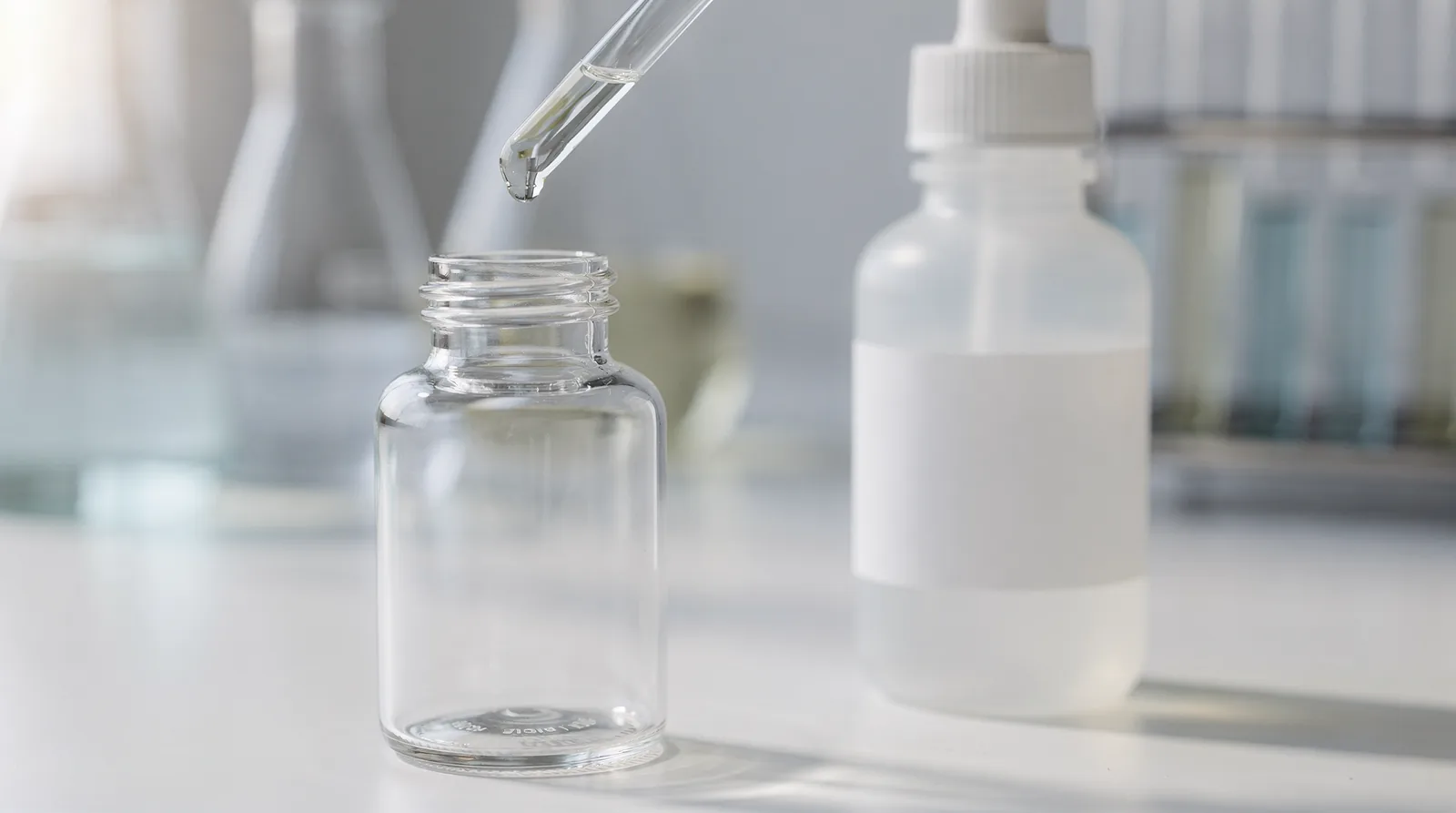
Borosilicate-grade droppers deliver measurable performance benefits for formulators handling reactive or temperature-sensitive oils. Glass formulated for extremely high resistance to heat. Cold, paired with strong chemical resistance, supports formulations that shift temperature during shipping or storage. That resistance profile sets certain glass types for droppers db007 apart from standard soda-lime options. Not every glass composition handles reactive ingredients or freight conditions equally well.
Dosage accuracy depends on more than the glass itself. Dropper assemblies fitted with the patented DripTrap bulb eliminate leaking, a critical factor when pairing bottles with dosage-sensitive formulas. Graduated pipette options extend that control further, giving formulators measured dosing instead of unpredictable free-flow dispensing.
Does borosilicate glass affect dosing precision?
Borosilicate composition alone doesn't determine dose accuracy — the dropper mechanism does. Selecting the right dropper ensures accurate dosage, prevents leakage, and improves the overall consumer experience with the finished product. Formulators pairing resistant glass with a leak-resistant assembly protect both product integrity and brand reputation.
Packaging managers weighing amber vs clear glass db007 should note that thermal and chemical resistance remain consistent across both tints. The real difference lies in light protection, not durability. Choosing the wrong dropper mechanism still risks leakage, regardless of glass color selected.
FAQ
What glass types work best for dropper bottles?
Borosilicate and soda-lime glass dominate premium dropper packaging. Euro round bottles, like the 30mL 18-DIN style, offer high clarity, colorability, and strong resistance to heat, cold, and chemical interaction, suiting oils, tinctures, and concentrated formulations.
Amber glass blocks more UV exposure, helping preserve light-sensitive actives in essential oils and serums. Clear glass showcases product color and clarity but offers less protection against degradation over time.
Why does neck finish compatibility matter for dropper bottles?
Standard codes like 18/400 or 20/410 indicate opening diameter and thread style. Matching these two numbers ensures the closure seals properly, preventing leakage or spoilage of concentrated oils.