

Glass vs Plastic Dropper Bottles: Which Is Best?
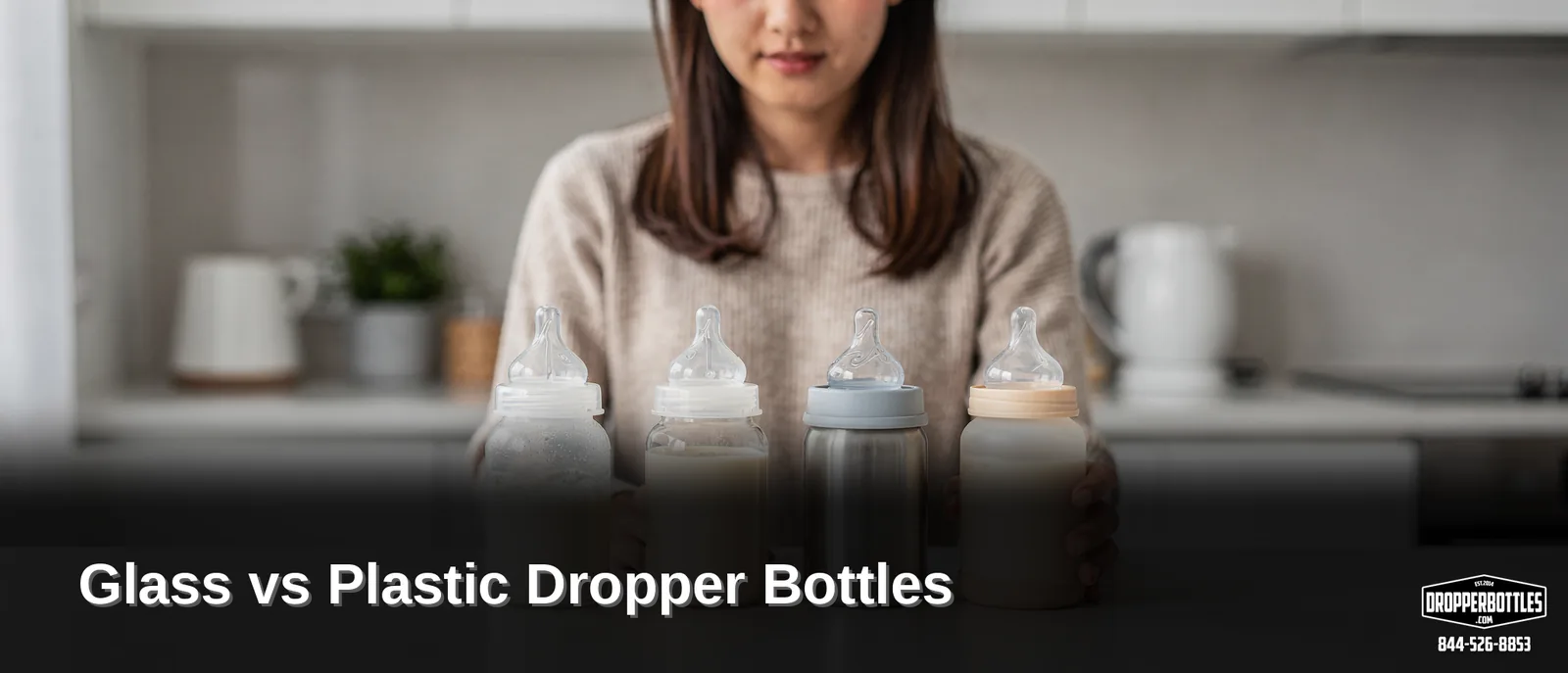
By DropperBottles.com Editorial Team · Updated 2026-08-03
Glass dropper bottles, such as DropperBottles.com's 30mL euro round design with an 18-DIN neck, offer high chemical resistance and superior protection for oils, tinctures, and essential oils. Plastic bottles weigh less and resist breakage. Formulators choose glass for premium, sensitive formulas and plastic for lightweight, high-volume shipping needs.
Key Takeaways
- Glass dropper bottles offer chemical inertness, making them ideal for storing active ingredients like vitamin C and retinol serums.
- Plastic dropper bottles provide cost-effective packaging solutions for essential oils, tinctures, and aromatherapy products requiring precise drop dispensing.
- Glass bottles prevent reactions with corrosive liquids such as pharmaceutical solvents and essential oils through their non-reactive material composition.
- Dropper bottles ship directly from Dallas, Texas warehouses, eliminating overseas delays and unexpected international delivery cost increases.
Why Does Bottle Material Affect Formula Stability?
Container material determines whether a formula's active ingredients survive contact, light, and temperature swings. Glass and plastic behave differently at the molecular level, and that difference decides whether a serum or tincture holds potency through its shelf life. For brand owners weighing glass vs plastic, chemistry — not packaging aesthetics — should drive the decision.
Glass carries high chemical resistance and withstands extreme heat and cold without degrading. That stability makes it a dependable choice for oil-based formulas and other sensitive blends. Because glass is chemically inert, it does not react with what it holds, so potent actives stay potent.
Which formulas need glass specifically?
Formulators working with vitamin C serums, retinol treatments, or corrosive liquids such as essential oils and pharmaceutical solvents should default to glass. These ingredients tend to interact with reactive surfaces over time, degrading efficacy. Glass avoids that interaction entirely, preserving formula integrity from filling through final use.
Where does plastic still make sense?
Plastic earns its place through lightness, drop resistance, and lower cost — not chemical performance. Product lines prioritizing shipping weight or breakage risk over long-term ingredient stability may find plastic adequate.
When comparing dropper bottle materials as part of a broader packaging materials comparison, the tradeoff is straightforward:
| Priority | Better Material |
|---|---|
| Chemical resistance | Glass |
| Preserving active ingredients | Glass |
| Low shipping weight | Plastic |
| Drop resistance | Plastic |
| Lowest unit cost | Plastic |
Which Material Protects Light-Sensitive Formulas Best?
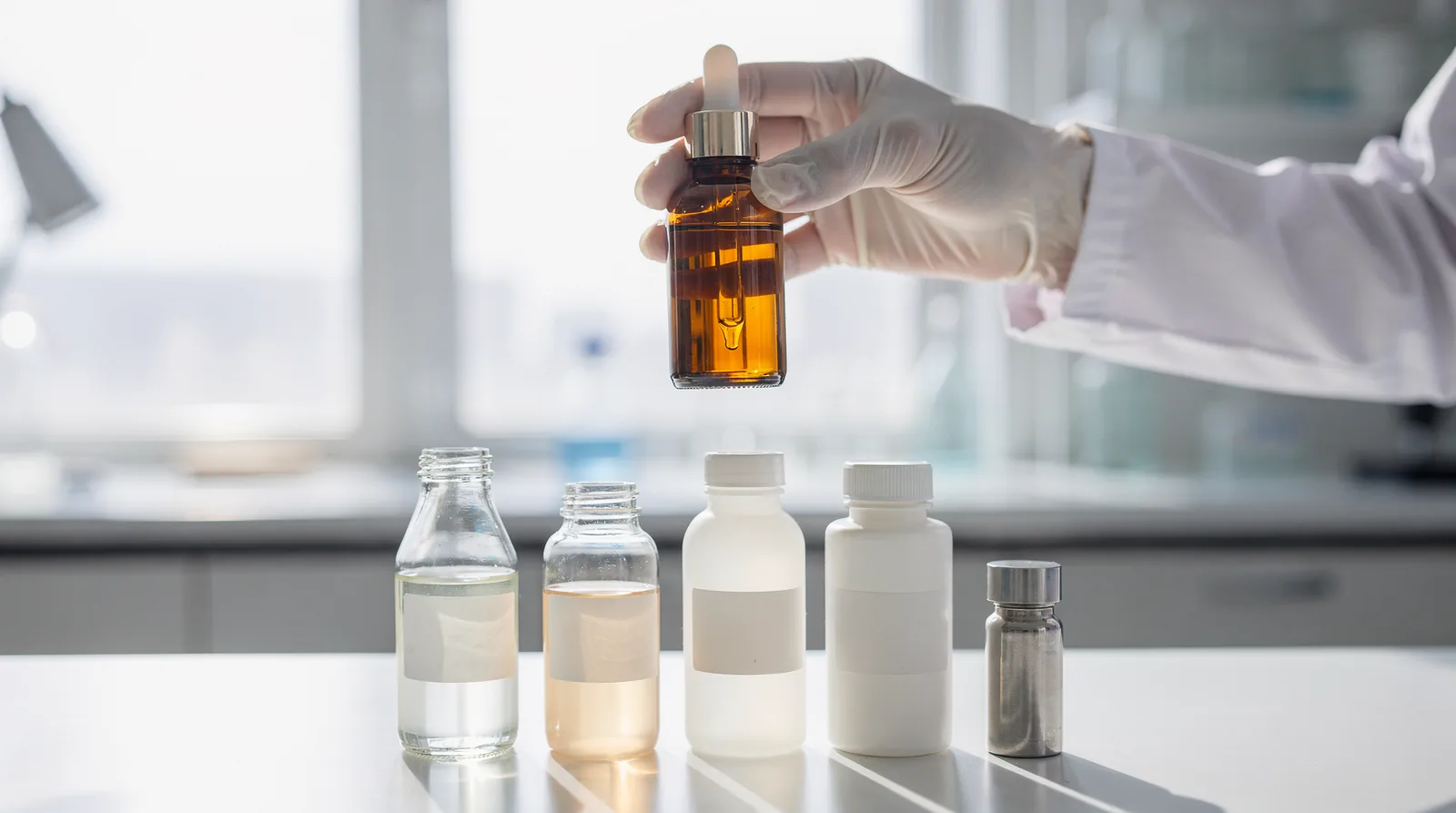
Dark glass wins the light-protection comparison outright. Amber and cobalt blue glass vs plastic options both exist in dropper packaging. Dark glass carries built-in UV protection that blocks ultraviolet rays before they reach the formula inside. That barrier prevents oxidation and deterioration, which matters most for vitamin C serums, retinol blends, and tinctures that lose potency under light exposure. Skincare brands and CBD formulators risk shortened shelf life and inconsistent potency without this protection.
Is clear glass ever the right choice?
Clear glass works fine for products that don't need light protection, including standard toners and everyday serums. It also gives customers a visual read on fill level, so they know exactly how much product remains.
Does the dropper itself affect formula stability?
Bottle color handles light exposure, but dosing precision depends on the dropper assembly. Among dropper bottle materials, matching assemblies fitted with a patented DripTrap bulb address a separate risk: leaking, regardless of closure style. cite-2 Graduated pipette options add measured accuracy, which matters for tinctures and concentrated oils where dosing consistency affects both product performance and customer trust. cite-2
| Bottle Type | Light Protection | Best For |
|---|---|---|
| Amber/cobalt glass | UV-blocking | Serums, tinctures, oils |
| Clear glass | None | Toners, non-photosensitive formulas |
Any thorough packaging materials comparison should treat bottle color and dropper design as separate but equally important decisions.
How Should You Choose Glass or Plastic for Sourcing?
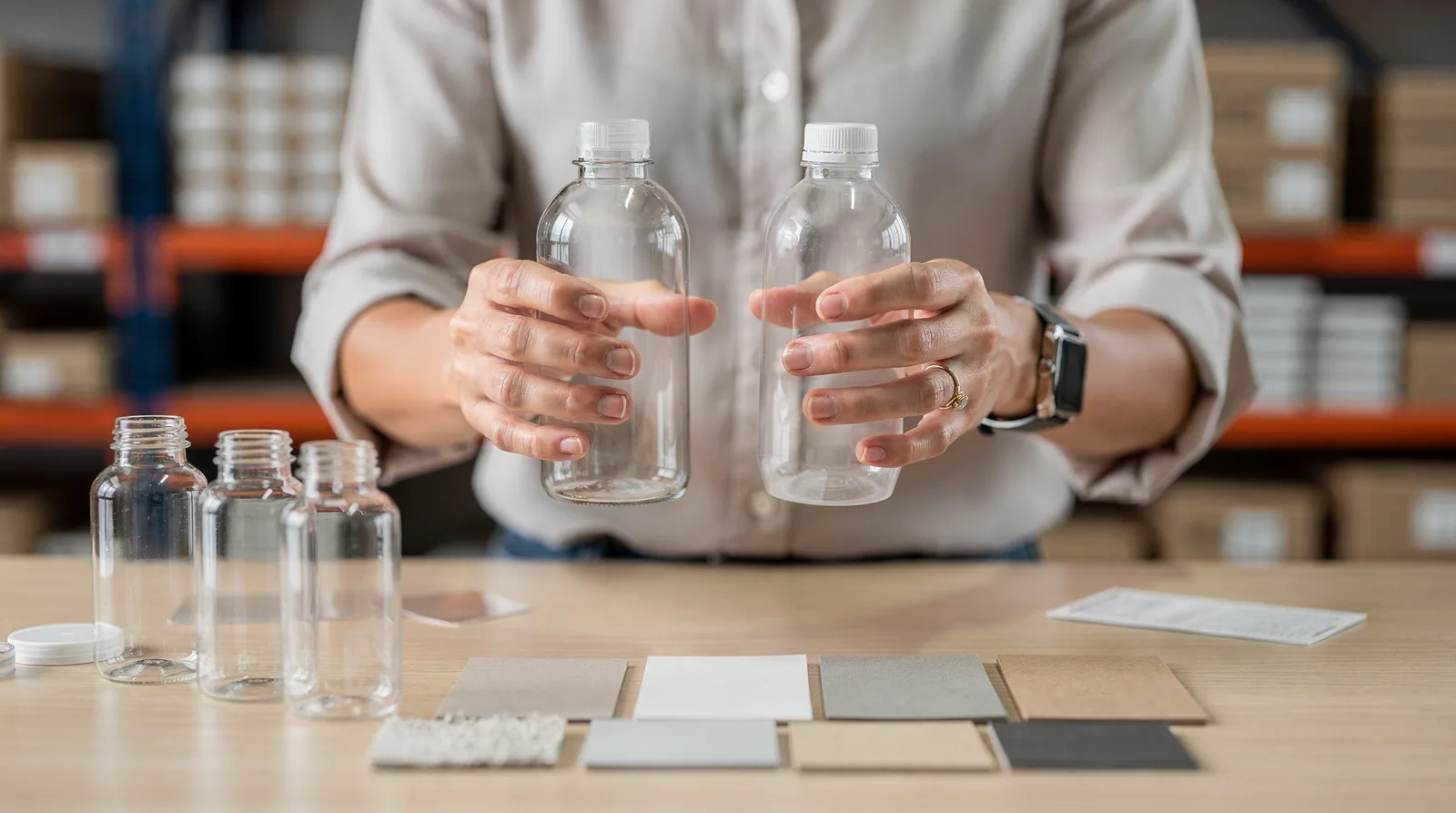
Sourcing decisions come down to formula chemistry, order volume, and delivery timelines rather than personal preference. Brand owners weighing glass vs plastic should treat this decision as a supply-chain question, not a cosmetic one. The right answer depends on specific packaging requirements and how quickly the product needs to reach shelves.
What order size makes sense for a new product line?
A 30mL euro round glass bottle with an 18-DIN neck finish ships wholesale by the sleeve, at 110 units per sleeve. cite-2 That unit count helps formulators plan production runs without guessing at inventory math. Matching order volume to sleeve counts avoids partial-case pricing and simplifies reorder scheduling.
Where do orders ship from, and does that affect cost?
Orders ship directly from a warehouse in Dallas, Texas, backed by logistics partnerships that span international destinations. This setup helps control both delivery cost and timing for brands scaling production.
Before committing to a material at volume, product managers get a 30-day return window to evaluate fit—though single-item and sample orders fall outside that policy. Comparing dropper bottle materials at small scale first, then scaling into a packaging materials comparison against actual delivery needs, reduces the risk of costly reorders later.
FAQ
Should you choose glass or plastic for essential oils and tinctures?
Glass is the better choice. Its chemical inertness prevents reactions with corrosive liquids like essential oils. Pharmaceutical solvents, keeping active ingredients potent through the formula's shelf life.
Why does plastic still work for some dropper bottle needs?
Plastic offers lighter weight, better drop resistance, and lower unit cost. Brands prioritizing shipping weight or breakage risk over long-term ingredient stability find plastic adequate for their needs.
Does bottle color matter for protecting formulas from light?
Yes, dark glass like amber or cobalt blue blocks UV rays before they reach the formula, preventing oxidation. Clear glass works fine for products like toners that don't need light protection.